

 Hazard Perception: Reading the Road Like a Pro
📌 Important update: As of 2025, the hazard perception section ("Gevaarherkenning") is no longer part of the CBR car theory exam. However, it remains an excellent training tool for developing real-world driving awareness — and many driving schools still use it for practice. Everything below is worth learning whether or not you'll be tested on it.
What Is Hazard Perception?
Every time you drive, your brain is constantly scanning the road, spotting potential dangers, and deciding how to react. That's hazard perception — and it's one of the most important skills a driver can develop.
The CBR hazard perception section used to test exactly this. You'd see 25 photos taken from behind the windscreen of a car — as if you were sitting in the driver's seat. Each photo showed:
- Your current speed on the dashboard
- The view in your rearview mirror
- Whether your indicators were on
- The full traffic situation ahead
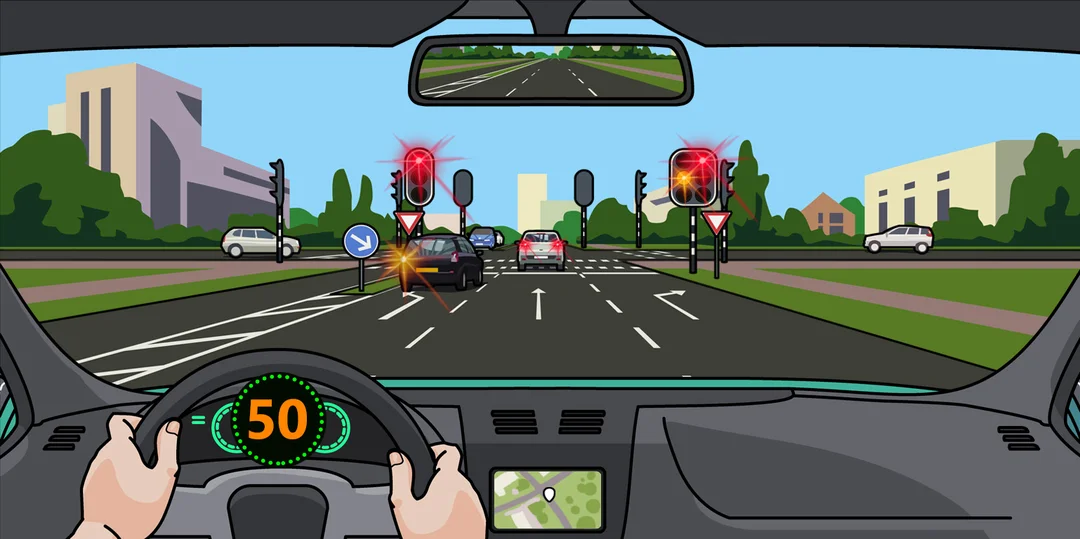
For each situation, you had just 8 seconds to choose one of three responses:
| Response | Meaning |
|---|---|
| 🟥 Brake | Slow down immediately — there's danger right now |
| 🟨 Release the accelerator | Take your foot off the gas — something might develop |
| 🟩 Nothing | Continue as you are — the situation is safe |
You were allowed up to 12 mistakes out of 25 questions.
Simple enough on paper. The challenge is learning when each response applies — and that's what the rest of this article will teach you.
The Decision Process: Four Quick Steps
When a photo appears, your brain needs to work through four steps — fast:
- Observe — What do you see? Check the road, pavements, mirrors, speed, signals.
- Predict — What could happen next? Could that child run onto the road? Could that car pull out?
- Escape routes — Are there ways to avoid danger? Can you swerve, or are you boxed in?
- Decide — Based on all of the above, pick: Brake, Release, or Nothing.
Step 3 is one that many learners forget. Always ask yourself: "If something goes wrong right now, do I have room to get out of trouble?" If the answer is no, you probably need to slow down.
Example scenario: You're driving 50 km/h on a residential street. You see a ball rolling onto the road from behind a parked car. Step 1: You see the ball and the parked car blocking your view. Step 2: A child will almost certainly chase that ball. Step 3: There's oncoming traffic, so you can't swerve left. Step 4: Brake — immediately.
When to BRAKE 🟥
Braking is your answer when danger is immediate and real. Something is happening right now, or is about to happen within seconds, and you need to reduce speed to stay safe.
Vulnerable road users in danger
- Children on or near the road — they're unpredictable and small
- Toys, balls, or scooters visible on the street — a child is almost certainly nearby
- Animals on or near the road (except birds — they typically fly away before you reach them)
- Elderly people or people with visible disabilities crossing or near the road
- Pedestrians crossing who haven't noticed you or seem distracted
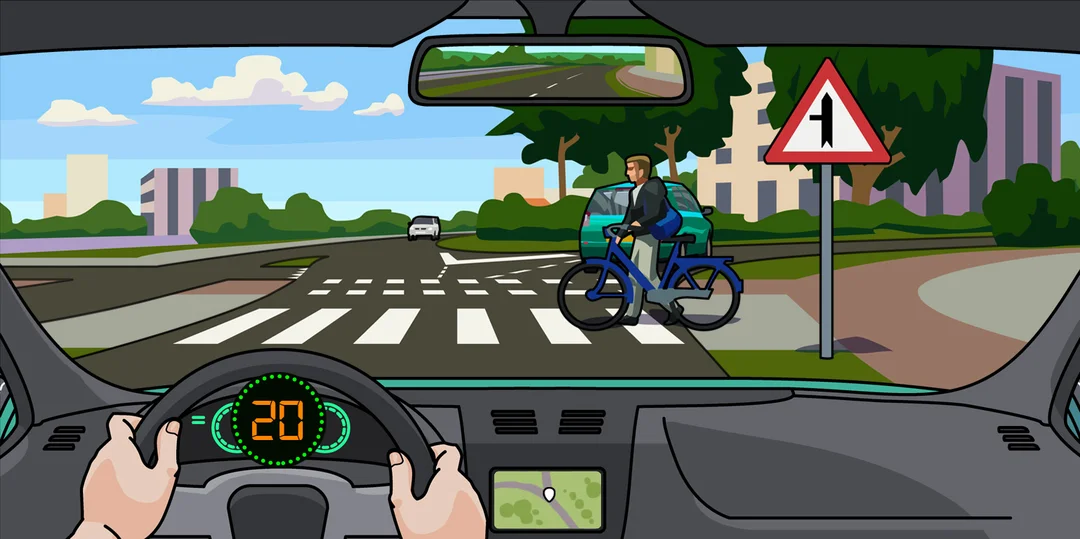
Memory aid: If someone could step in front of you in the next 2–3 seconds and they can't protect themselves — brake.
Traffic rules demand it
- The traffic light has turned amber (orange) — in Dutch: "oranje"
- You're approaching an intersection where you must give way
- An oncoming vehicle appears while you're overtaking
You're going too fast for the situation
This is the biggest category. Brake when your current speed is too high for what's directly ahead:
- A speed bump is right in front of you
- A sharp bend is coming up immediately
- A narrow road with oncoming traffic and no room to pass safely
- Queuing or stopped traffic ahead
- Bad weather — rain, fog, ice — reducing your grip and visibility
- An obstacle in your lane (parked car, roadworks, debris)
- A busy area like a shopping street, school zone, or market
- Very limited visibility — you can't see far enough to react at your current speed
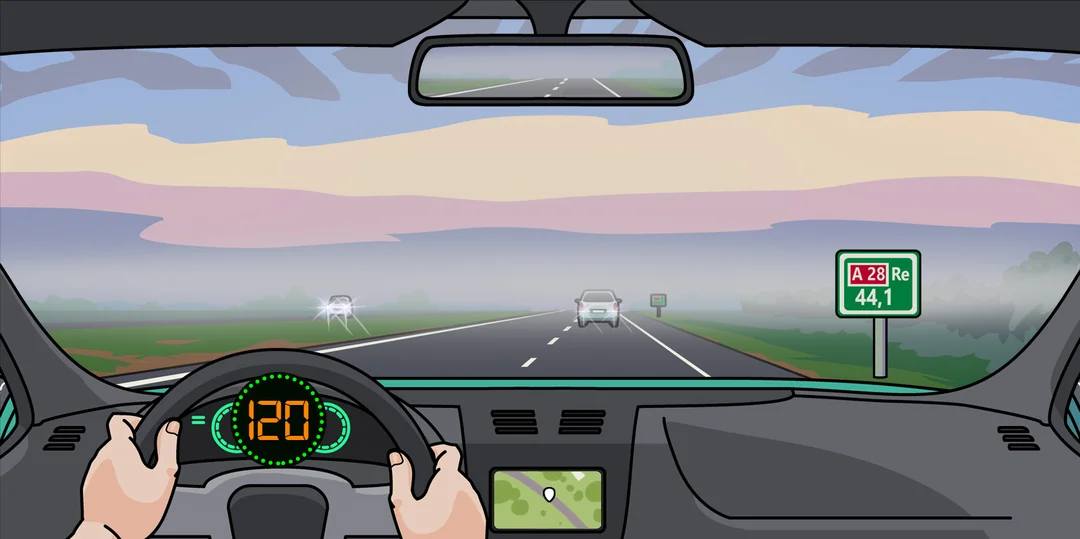
The golden rule for braking: If the danger is here and now, brake.
When to RELEASE THE ACCELERATOR 🟨
Releasing the accelerator is the "caution" response. The situation isn't dangerous yet, but it could become dangerous. You're buying yourself time and reducing speed gently.
You're uncertain about the situation
- Something feels off but you can't pinpoint why
- You have limited visibility — parked cars, hedges, a crest in the road
- You're not sure what another road user is about to do
The danger is still at a distance
This is the key distinction from braking. The same hazards that require braking when they're close call for releasing the accelerator when they're further away:
- A speed bump visible in the distance
- A bend approaching but still far off
- An obstacle you can see ahead but have time to prepare for
- Bad conditions with oncoming traffic visible but still at a distance
- A narrow road with oncoming traffic, but there's still space and time
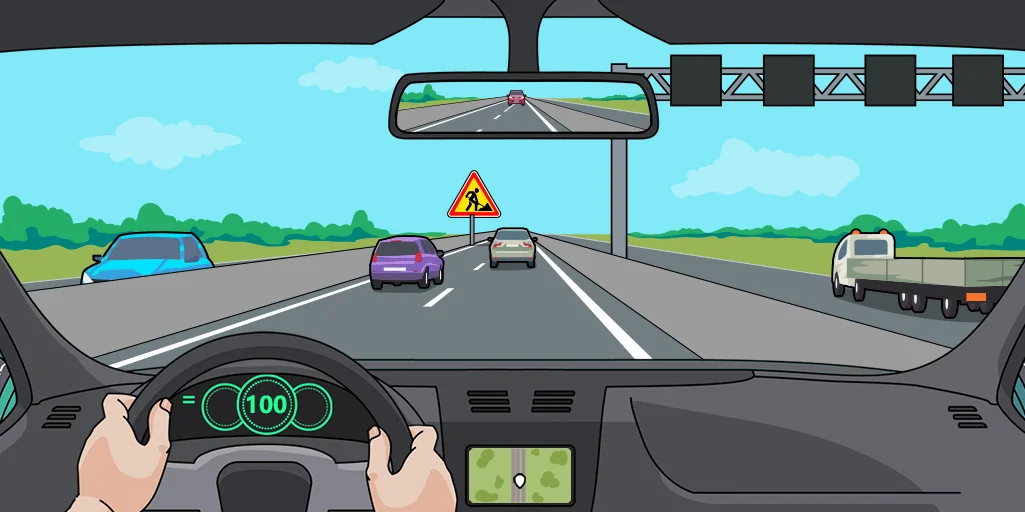
The golden rule for releasing: If the danger is over there but coming, take your foot off the gas.
When to Do NOTHING 🟩
"Nothing" doesn't mean you're ignoring the road — and it never means accelerate. It means the situation is under control, your speed is appropriate, and no adjustment is needed. You simply maintain your current behaviour.
Choose "Nothing" when:
- There is no immediate or developing danger visible
- You already have a clear overview of the entire situation
- You're already driving at an appropriate speed (slowly or at the correct limit for this road)
- The road ahead is clear and predictable
- The situation may be busy, but you're already handling it correctly
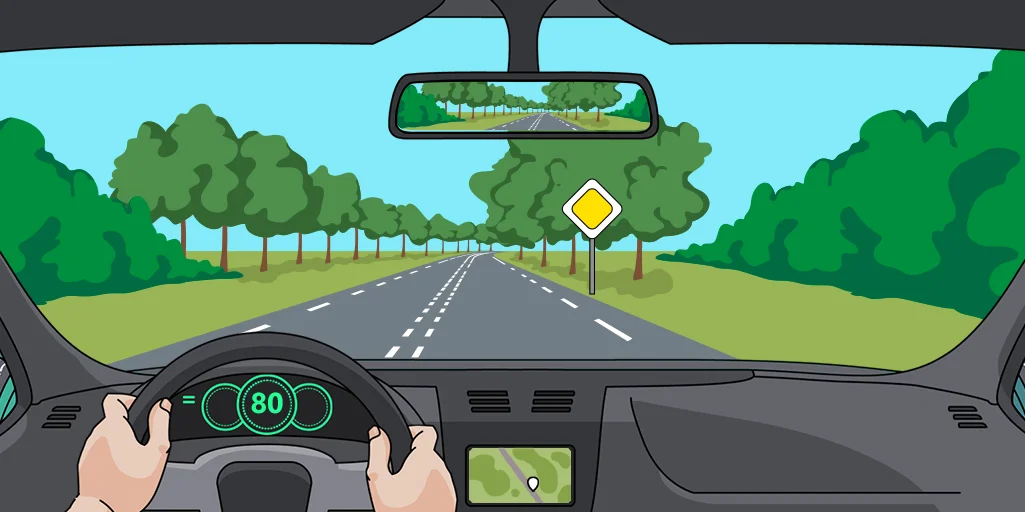
The golden rule for nothing: If you're in control, the road is clear, and your speed fits the situation — carry on as you are.
Practical Tips for Getting It Right
Tip 1: Check the speedometer first
Your speed changes everything. Going 30 km/h past a school? Maybe nothing is needed. Going 70 km/h in the same situation? You'd better brake.
Tip 2: Distance is yoandur best friend
The closer the hazard, the stronger your response:
- Close → Brake
- Far → Release accelerator
- Not there → Nothing
Tip 3: Think about who's on the road
Vulnerable people (children, elderly, cyclists) always escalate the response. A parked car on an empty road might be "release accelerator." A parked car next to a school at 3 PM is "brake."
Tip 4: When in doubt, release the accelerator
If you genuinely can't decide between braking and doing nothing, "release accelerator" is almost always the safest middle ground. It shows awareness without overreacting.
Tip 5: Don't overthink it
You have 8 seconds. Trust your gut after learning the principles. If the photo makes you nervous, you probably need to at least release the accelerator. If it makes you scared, brake.
Quick Reference Summary
| Situation | Response |
|---|---|
| Child near the road | 🟥 Brake |
| Ball/toys on the street | 🟥 Brake |
| Animal on the road (not a bird) | 🟥 Brake |
| Amber (orange) traffic light | 🟥 Brake |
| Oncoming car while overtaking | 🟥 Brake |
| Sharp bend right ahead | 🟥 Brake |
| Speed bump right ahead | 🟥 Brake |
| Queuing traffic ahead | 🟥 Brake |
| Busy shopping street at speed | 🟥 Brake |
| Very poor visibility | 🟥 Brake |
| Speed bump in the distance | 🟨 Release accelerator |
| Bend visible ahead, still far | 🟨 Release accelerator |
| Uncertain / limited view | 🟨 Release accelerator |
| Narrow road, oncoming far away | 🟨 Release accelerator |
| Clear road, good visibility | 🟩 Nothing |
| Already driving slowly enough | 🟩 Nothing |
| No hazards visible anywhere | 🟩 Nothing |
Even though hazard perception is no longer on the exam, practicing these scenarios will make you a safer, more confident driver from day one. The ability to read the road and react appropriately isn't just theory — it's the skill that keeps you and everyone around you alive.