Understanding the legal framework behind driving in the Netherlands is essential for passing the CBR theory exam. This article covers everything from your driving licence and required documents to insurance obligations, alcohol and drug testing, and the complete glossary of terms you may encounter on test day.
Legal Provisions
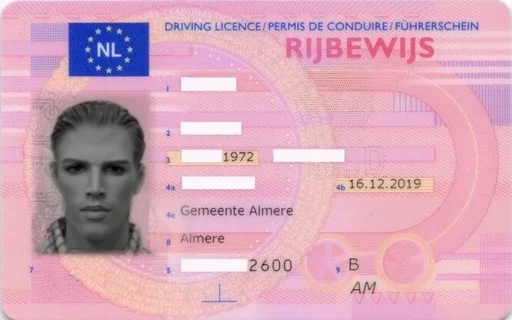
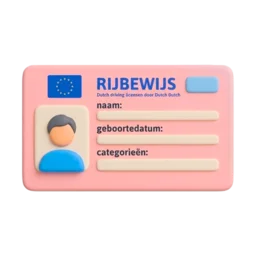
Category B Driving Licence
A category B driving licence allows you to operate a four-wheeled motor vehicle weighing up to 3,500 kg (permitted maximum mass) and designed to seat a maximum of 8 passengers (the driver is not counted).
Your licence must be renewed:
- Every 10 years under normal circumstances
- Every 5 years once you reach the age of 70 or older
The expiry date is printed on the card itself. Once your licence has expired, driving is no longer permitted.
Manual versus Automatic
If you took your practical exam in an automatic car, your licence is restricted to automatics only — you may not drive a manual. However, passing the test in a manual car qualifies you for both manual and automatic vehicles.
Moped Licence (AM)
Category AM is included automatically with a category B licence. It entitles you to ride:
- Mopeds and scooters
- Speed pedelecs
- Snorfietsen (low-speed mopeds limited to 25 km/h)
- Brommobielen (microcars / moped cars)
No separate test is needed.
2toDrive — Driving from Age 17
The 2toDrive programme lets young people start the licensing process earlier and build experience under supervision:
| Age |
What you can do |
| 16 |
Sit the theory exam (certificate valid for 1.5 years) |
| 16½ |
Begin driving lessons with an instructor |
| 17 |
Take the practical exam |
| 17–18 |
Drive accompanied by an approved coach (e.g. a parent) |
| 18 |
Drive independently |
You choose your own coach, provided they meet the official requirements.
Penalty Points Licence
Every driver in the Netherlands holds a penalty points licence (puntenrijbewijs). Its purpose is to deter drink-driving.
How the system works:
- A conviction for driving with excess alcohol earns you one penalty point, which stays on your record for 5 years.
- A second drink-driving conviction within those 5 years adds another point (also lasting 5 years).
- Immediate licence loss occurs if you are caught driving with a blood alcohol concentration above 1.3 ‰ (promille) while you already have a penalty point on your record. You must then obtain your licence again from scratch.
Beginner's Licence
For the first 5 years after obtaining your licence, you hold a beginner's licence (beginnersrijbewijs). The government uses this mechanism to crack down on reckless new drivers.
A novice driver collects penalty points for serious traffic offences. After two convictions for serious offences, the beginner's licence must be surrendered to the police.
Examples of offences that trigger penalty points:
- Causing a traffic accident
- Creating danger or hindrance on the road
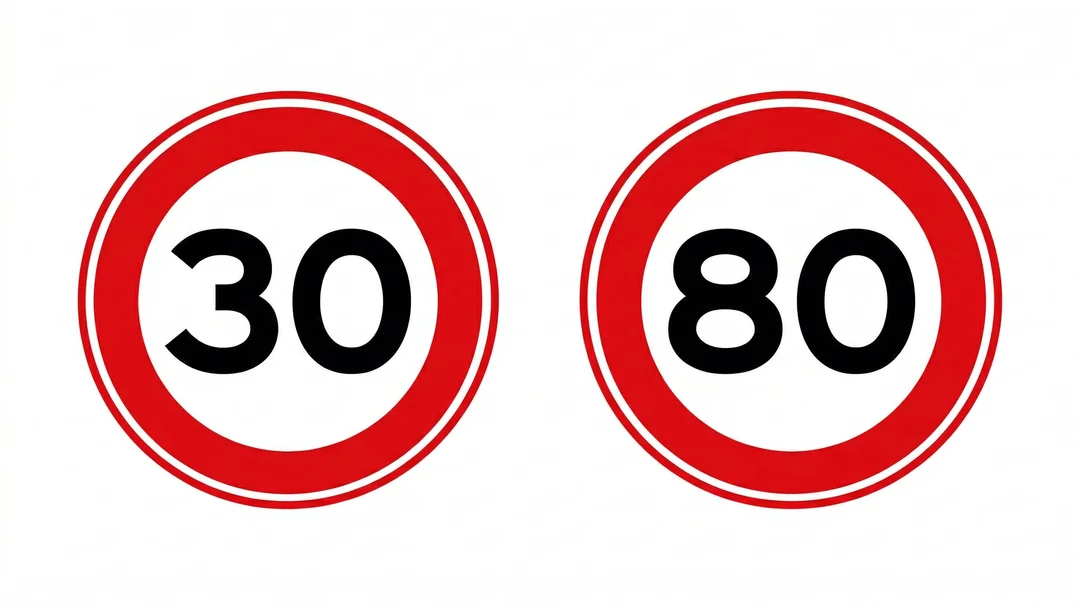
- Tailgating at speeds above 80 km/h
- Exceeding the speed limit by 40 km/h or more on a motorway
- Exceeding the speed limit by 30 km/h or more on any other road
Note: You do not receive a new beginner's licence if you already hold a licence in another category, add a new category to an existing licence, or exchange a foreign licence for a Dutch one.
Required Documents While Driving
When you are behind the wheel in the Netherlands, you must carry two documents — and they must be originals, not copies:
- Your driving licence
- The vehicle registration document (kentekenbewijs)
You are not required to carry:
- The APK inspection report (MOT equivalent)
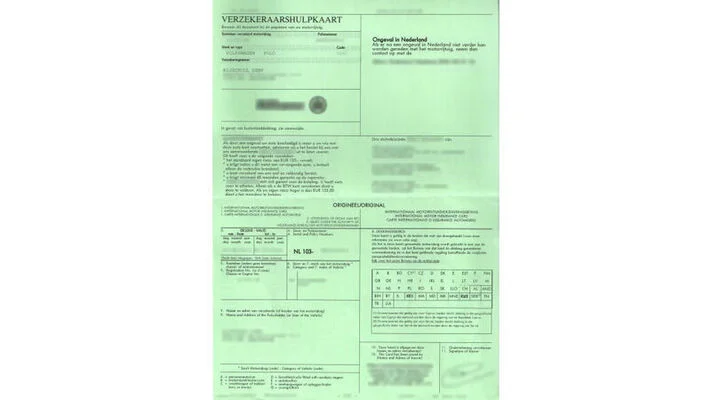
- A green card (international insurance certificate)
- A European Accident Statement form (schadeformulier)
Vehicle Insurance
Motor vehicle insurance is compulsory in the Netherlands — even if the car is parked and not being used. The RDW (Netherlands Vehicle Authority) monitors whether every registered vehicle is insured. Driving or owning an uninsured car can result in a fine.
The only way to avoid the insurance obligation is to suspend your registration (schorsen), which is only possible if the vehicle is not parked on public roads.
There are three levels of coverage:
| Type |
What it covers |
| WA (Wettelijke Aansprakelijkheid — third-party liability) |
Damage you cause to other road users only. This is the legal minimum. |
| WA+ (third-party + limited own damage) |
Everything WA covers, plus partial coverage for damage to your own vehicle (e.g. theft, storm, fire). |
| All-risk (comprehensive) |
All damage, including damage to your own car regardless of fault. |
The Green Card
The green card is an international insurance certificate. In the Netherlands and most EU/EEA countries it is not compulsory to carry one. However, it is strongly recommended because it lists all your insurance details in a format recognised abroad. The validity period is shown on the card and typically matches your insurance policy period.
Road Tax (Motorrijtuigenbelasting)
Every vehicle owner must pay road tax. The amount depends on four factors:
- Fuel type (petrol, diesel, electric, etc.)
- Environmental impact (how polluting the vehicle is)
- Weight of the vehicle
- Province where the registered owner lives
Road tax must be paid even if you have no valid APK certificate — as long as the registration is active.
Registration Certificate and Registration Card
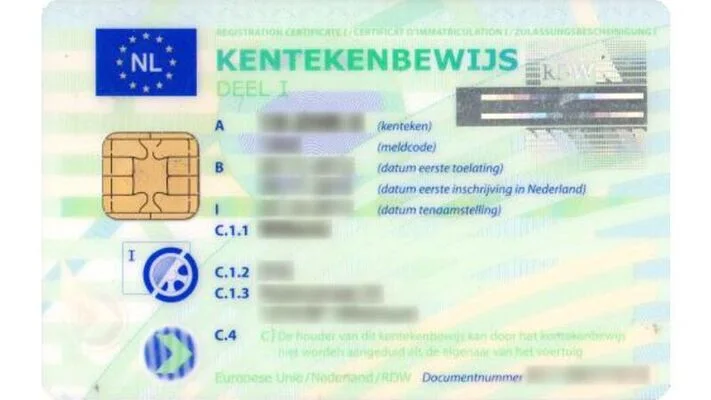
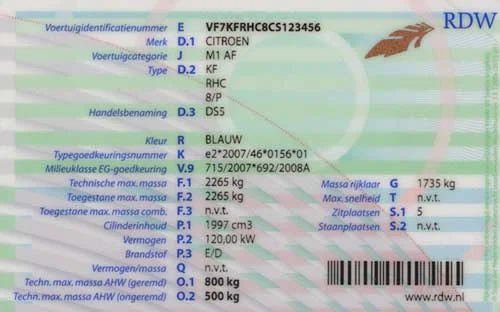
Every vehicle in the Netherlands has a registration certificate (kentekenbewijs). Since 1 January 2014, the RDW has issued the registration card (kentekencard) — a credit-card-sized version of the certificate.
You must always carry the registration document in your vehicle while driving. The card shows:
- The licence plate holder's personal details
- The vehicle's technical specifications
Together with the registration card you also receive a vehicle registration code (tenaamstellingscode). This code is required whenever the vehicle changes ownership.
Note: Older paper registration certificates do not have a digital registration code. Instead, they include a transfer certificate (overschrijvingsbewijs) which serves the same purpose when changing ownership.
Traffic Crimes versus Violations
Dutch law distinguishes between two categories of punishable behaviour on the road:
|
Violations (overtredingen) |
Crimes (misdrijven) |
| Severity |
Minor offences |
Serious offences |
| Criminal record |
No |
Yes |
Examples of violations:
- Running a red light
- Illegal parking
- Speeding
Examples of crimes:
- Driving under the influence of substances that impair driving ability
- Fleeing the scene of an accident (hit-and-run)
- Joyriding — driving someone else's vehicle without permission
Driving Ban versus Licence Suspension
These two measures are often confused but differ significantly:
Driving ban (rijverbod)
During a driving ban you may not operate any vehicle — not even a bicycle. A driving ban lasts a maximum of 24 hours.
Licence suspension (rijontzegging)
A licence suspension prohibits you from driving motorised vehicles (including mopeds and snorfietsen) for a set period. It can be imposed for:
- Causing danger or hindrance
- Driving under the influence
- Leaving the scene of an accident
- Driving while a driving ban is in effect
Alcohol Testing
You are obliged to cooperate with an alcohol check. The procedure works as follows:
- Roadside breath test — a preliminary screening.
- If you refuse or the result is positive, the police can order a breath analysis (ademanalyse) at the station.
- You must cooperate with the breath analysis unless a medical condition genuinely prevents it.
- Refusing a breath analysis is a criminal offence. Religious beliefs are not a valid reason to refuse.
Drug Testing
Cooperation with a drug test is mandatory. The process:
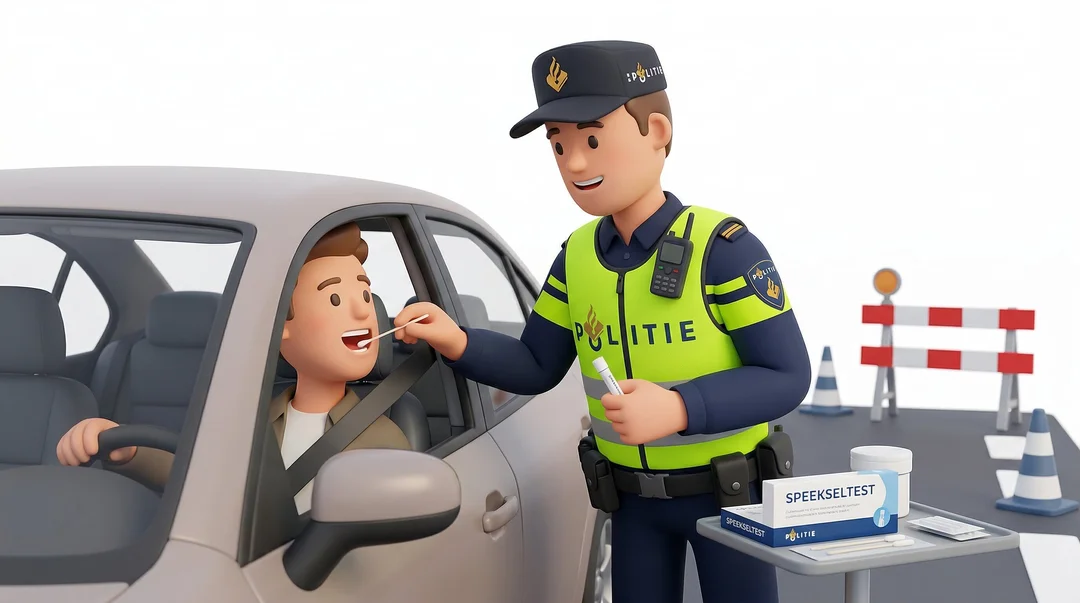
- A saliva test is conducted at the roadside.
- If the saliva test is positive, the suspect is taken to the police station for a blood test.
- The blood test provides a precise determination of which substances are present and at what level.
- The blood test result decides whether the driver has committed an offence.
Refusing to cooperate with either the saliva test or the blood test is a criminal offence.
Penalties for Driving Under the Influence
Driving under the influence is classified as a crime. Penalties and measures vary according to severity and may include:
- A driving ban imposed by the police (up to 24 hours)
- A substantial fine, community service, or imprisonment of up to 1 year
- A compulsory CBR course (educational measure)
- A licence suspension of up to 5 years, imposed by a judge
Educational Measures (Educatieve Maatregelen)
The CBR can impose a compulsory educational programme on drivers who commit serious traffic offences or drive under the influence. This measure is in addition to any penalty from the public prosecutor or judge. The driver must pay for the course themselves. Failure to complete the course results in losing your driving licence.
There are five educational measures:
1. LEMA — Light Educational Measure Alcohol and Traffic
Goal: Prevent repeat drink-driving.
Imposed when a driver is caught with the following breath alcohol levels:
| Driver type |
Breath alcohol (μg/l) |
Blood alcohol (‰) |
| Novice driver |
220 – 350 |
0.5 – 0.8 |
| Experienced driver |
350 – 435 |
0.8 – 1.0 |
Note: These are CBR administrative measure (LEMA/EMA) thresholds, not the basic legal alcohol limits. The legal limit is 0.2 ‰ for beginner drivers and 0.5 ‰ for experienced drivers. Beginner-driver status usually lasts 5 years, but in some cases 7 years.
2. EMA — Educational Measure Alcohol and Traffic
A more intensive measure than the LEMA. It can be imposed on:
Novice drivers who:
- Are caught with a breath alcohol content of 350 – 570 μg/l (0.8 – 1.3 ‰)
- Have been stopped twice in the past 5 years for drink-driving with a blood alcohol level above 0.2 ‰
- Refuse to cooperate with an alcohol test
Experienced drivers who:
- Are caught with a breath alcohol content of 435 – 785 μg/l (1.0 – 1.8 ‰)
- Have been stopped twice in the past 5 years for drink-driving with a blood alcohol level above 0.5 ‰
- Refuse to cooperate with an alcohol test
3. LEMG — Light Educational Measure Behaviour (from 01-04-2023)
Aimed at drivers caught exceeding the speed limit by 50 to 60 km/h (or 30 to 60 km/h in roadwork zones). These are typically younger drivers who commit substantial speeding offences.
4. EMG — Educational Measure Behaviour and Traffic
Applies to both novice and experienced drivers. It targets those who, for example:
- Exceed the speed limit by more than 60 km/h
- Overtaking on the right
- Commit multiple violations in a single journey — such as tailgating, cutting off other drivers, or running a red light
5. EMD — Educational Measure Drugs (from 01-04-2023)
Designed for drivers stopped for driving under the influence of drugs. If the driver has been caught for drug-impaired driving once before in the past 5 years, a fitness-to-drive assessment is conducted first. If the assessment finds the driver fit, the EMD is still imposed.
Vehicle Searches by Police
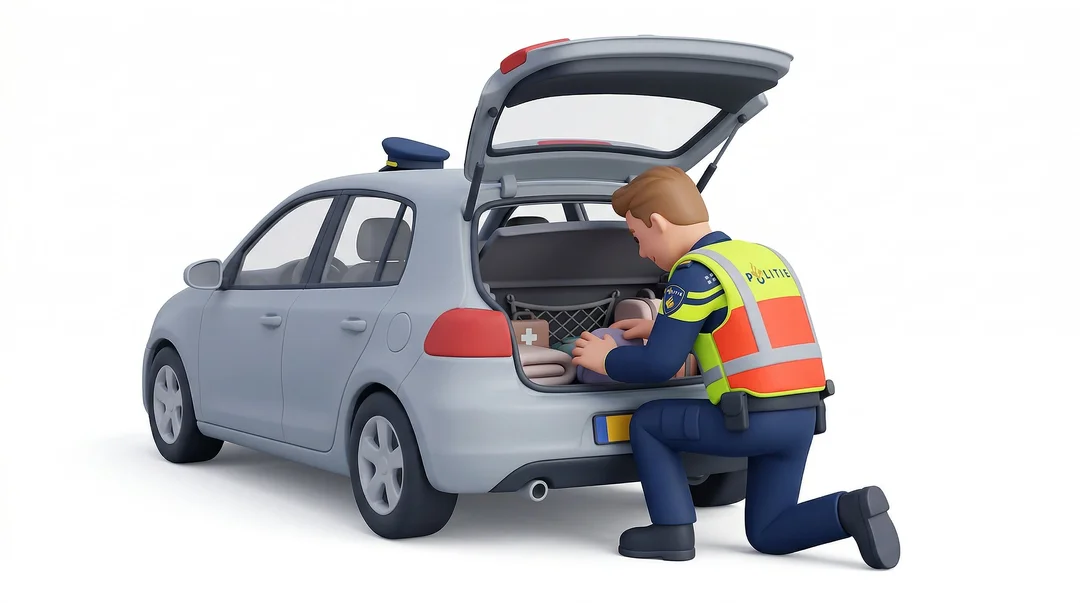
A police officer has the authority to search your vehicle if there are grounds to suspect the presence of:
- Weapons
- Stolen goods
- Evidence related to a criminal investigation
Glossary of CBR Exam Terms
The following terms may appear on the CBR theory exam. Understanding each one is essential. They are grouped by category to help you study more effectively.
Vehicles and Vehicle Types
Agricultural Vehicle — A vehicle built for farming tasks, such as a tractor, harvester, or farm trailer.
Ambulance — A motor vehicle fitted out and intended for transporting sick or injured people to medical facilities, staffed by paramedics or emergency medical technicians.
Animal Ambulance — A motor vehicle equipped and intended for transporting sick or wounded animals.
Bicycle with Pedal Assistance — A bicycle fitted with an electric motor (max. 0.25 kW continuous output) whose assistance cuts off at 25 km/h or when the rider stops pedalling.
Bus — A motor vehicle constructed to carry more than eight passengers (the driver is not counted).
Coach — A large motor vehicle used for long-distance passenger transport, such as tours, charter trips, or intercity services.
Commercial Vehicle (Bedrijfsauto) — As defined in Article 1.1(h) of the Vehicle Regulations.
Disabled Person's Vehicle (Gehandicaptenvoertuig) — A vehicle adapted for transporting a person with a disability, no wider than 1.10 m, either without an engine or with an engine whose top design speed does not exceed 45 km/h. It is not classified as a moped.
Emergency Vehicle (Voorrangsvoertuig) — A motor vehicle displaying the optical and acoustic warning signals described in Article 29 of the traffic regulations — for example, police cars, fire engines, and ambulances.
Fire Engine — An emergency vehicle specifically designed for firefighting, carrying water, hoses, ladders, and other firefighting equipment.
Goods Vehicle (Vrachtauto) — A motor vehicle not designed for passengers, with a permitted maximum mass exceeding 3,500 kg.
Lorry — A large motor vehicle used for transporting goods or cargo; also called a truck.
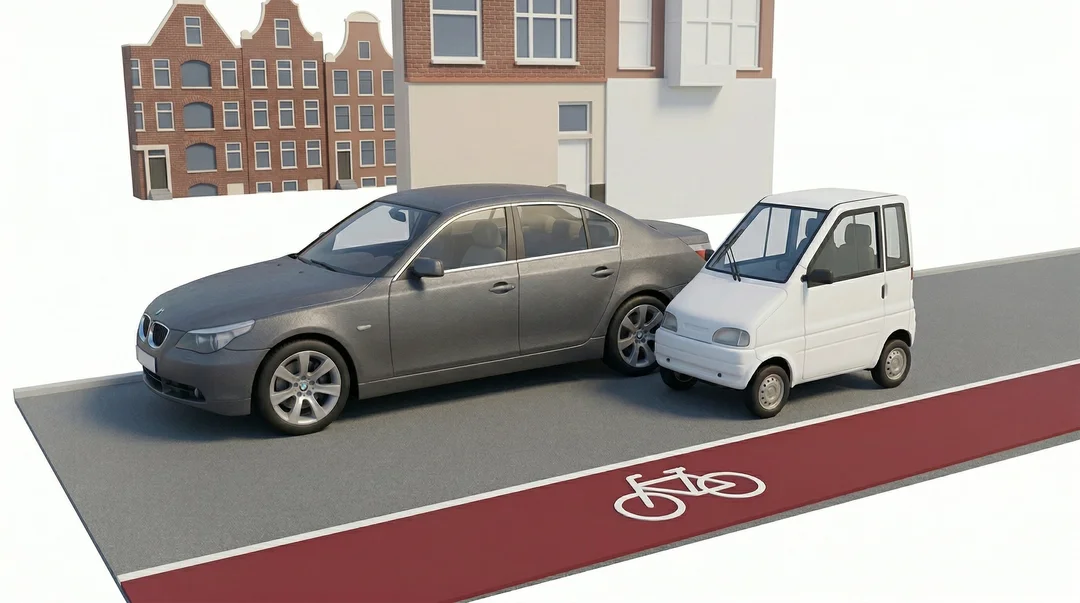
Microcar (Brommobiel) — A moped with more than two wheels that has a closed body (carrosserie) enclosing the driver.
Moped (Bromfiets) — A motor vehicle (2, 3, or 4 wheels) with a design speed not exceeding 45 km/h, fitted with an internal combustion engine of max. 50 cc or an electric motor of max. 4 kW continuous output, not being a disabled person's vehicle. A vehicle registered as a moped on its registration certificate is always considered a moped.
Motor-Assisted Bicycle (Snorfiets) — A moped whose registration indicates a maximum design speed of no more than 25 km/h.
Motor-Assisted Trailer Bicycle (Brombakfiets) — A three-wheeled moped with two front wheels (diameter > 0.40 m), designed exclusively for transporting the driver, goods, and possibly one rear passenger.
Motorcycle (Motorfiets) — A motor vehicle on two wheels, which may have a sidecar or tow a trailer.
Motor Vehicle (Motorvoertuig / Motorrijtuig) — All motorised vehicles except mopeds, bicycles with pedal assistance, and disabled person's vehicles, intended to travel off rails. In the broader legal sense (motorrijtuigen), it includes all vehicles propelled by mechanical force except pedal-assisted bicycles.
Passenger Car (Personenauto) — As defined in Article 1.1(at) of the Vehicle Regulations.
Police Car — A marked vehicle used by law enforcement for patrolling, traffic control, and emergency response.
Road Sweeper (Veegwagen) — A specialised vehicle with brushes and suction used to clean road surfaces.
Scheduled Bus (Lijnbus) — A motor vehicle used for public passenger transport under the Passenger Transport Act 2000.
Speed Pedelec — An electric bicycle with a powerful motor capable of reaching up to 45 km/h on the carriageway; commonly used for longer commutes.
T100 Bus — A bus whose registration or register indicates it is configured for a maximum speed of 100 km/h. Equivalent status applies to buses registered in other EU/EEA member states if accompanied by documentation from an approved testing authority.
Three-Wheeled Motor Vehicle — As defined in Article 1.1(q) of the Vehicle Regulations.
Tractor — A specialised vehicle designed for agricultural work, typically with large rear wheels and attachments for farming implements.
Trailer (Aanhangwagen) — A vehicle designed to be towed by another vehicle, including semi-trailers.
Van (Bestelauto) — A motor vehicle intended for transporting goods, with a permitted maximum mass of no more than 3,500 kg.
Vehicles (Voertuigen) — Bicycles, mopeds, disabled person's vehicles, motor vehicles, trams, and wagons.
Road Infrastructure and Markings
Acceleration Lane (Invoegstrook) — A lane separated from the main carriageway by block markings, used by drivers to build up speed before merging into through traffic.
Built-Up Area (Bebouwde kom) — An area with a dense concentration of buildings, indicated by H1 signs at entry, where lower speed limits apply.
Bus Lane (Busstrook) — A section of the carriageway marked with broken or solid lines and labelled "BUS" or "LIJNBUS", reserved for bus traffic.
Bus Route (Busbaan) — A separate traffic route indicated by the word "BUS" or "SCHEDULED BUS".
Bus Stop — A designated location along a bus route where passengers board and alight.
Carriageway (Rijbaan) — Any part of the road intended for vehicular traffic, excluding footpaths and dedicated cycle or moped tracks.
Closed Lane — A lane temporarily closed to traffic, for instance due to roadworks, accidents, or events.
Continuous Carriageway (Doorgaande rijbaan) — The main carriageway without entry or exit lanes.
Cycle Lane (Fietsstrook) — A section of the carriageway marked by broken or solid lines and displaying bicycle symbols, designated for cyclists.
Deceleration Lane (Uitrijstrook) — A lane separated from the main carriageway by block markings, used by drivers to slow down when exiting through traffic.
Divider (Puntstuk) — A polygon-shaped area painted on the road surface where roads, lanes, or carriageways merge or diverge.
Fork (Splitsing) — A point where a road divides into two or more branches, requiring the driver to choose a direction.
Give Way Markings (Haaientanden) — Priority triangles (shark teeth) painted on the road surface, indicating you must yield.
Hard Shoulder / Refuge Section (Vluchthaven / Vluchtstrook) — A paved strip along the edge of a motorway or main highway, separated by a solid line, intended for emergency use only — except when open as a rush-hour lane.
Hatched Road Markings (Verdrijvingsvlak) — Diagonal stripes painted on the carriageway to indicate areas where overtaking, stopping, or lane-changing is restricted.
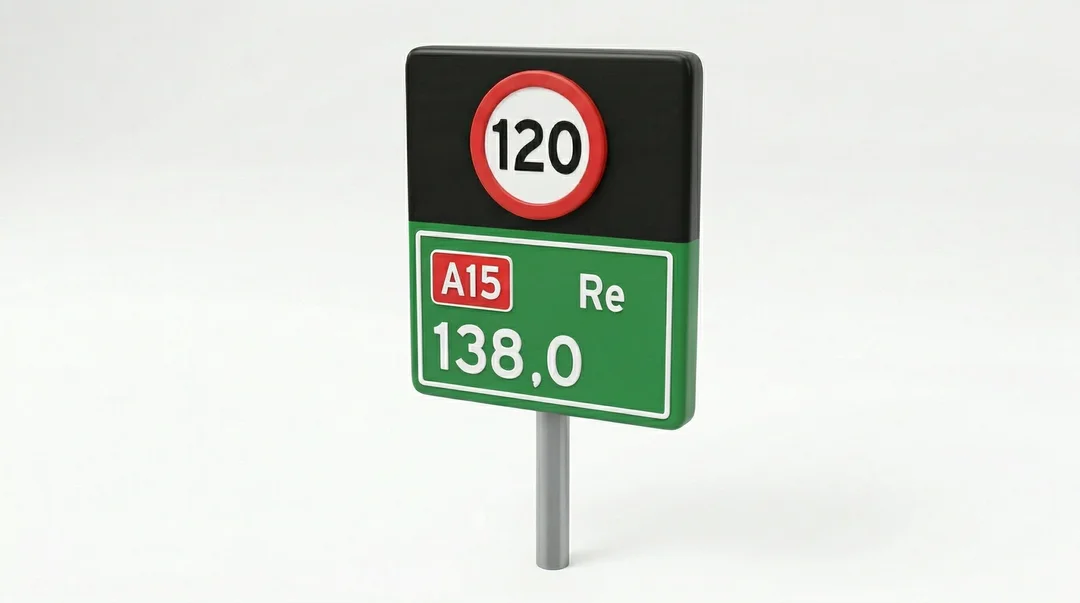
Hectometre Sign (Hectometerbordje) — A roadside marker placed every 100 m along motorways. In case of an accident, the information on the sign helps emergency services locate the incident precisely.
Junction (Kruispunt) — A point where two or more roads cross or merge, often governed by traffic lights, signs, or roundabouts.
Level Crossing (Overweg) — A place where a road intersects a railway track, marked by sign J12 or J13.
Main Carriageway — The through-traffic lanes of a motorway, excluding acceleration and deceleration lanes.
Main Highway (Autoweg) — A road designated by sign G3. Parking areas, petrol stations, and bus stops along a main highway are not part of it.
Motorway (Autosnelweg) — A multi-lane, high-speed road designated by sign G1, with controlled access and higher speed limits. Adjacent parking areas, filling stations, and bus stops are not part of the motorway.
One-Way Street — A street where all traffic must flow in a single direction, indicated by signage and road markings.
Parking Area / Parking Lane (Parkeerhaven / Parkeerstrook) — A paved strip alongside the carriageway designated for stationary or parked vehicles.
Parking Lot — An area designated for parking multiple vehicles, typically near buildings or public facilities.
Pedestrian Crossing (Voetgangersoversteekplaats / Zebrapad) — A marked crossing where pedestrians and disabled-person vehicles may cross the road safely.
Priority Junction — An intersection where one road has right of way over another, as indicated by signs or markings.
Road Edges — The cambered or sloped edges of a carriageway.
Road Narrowing (Wegversmalling) — A section where the road width decreases, requiring drivers to adjust speed or yield to oncoming traffic.
Road Surface — The top layer of a road — typically asphalt, concrete, or gravel — providing a durable driving surface.
Turbo Roundabout (Turborotonde) — A multi-lane roundabout with spiral lane markings that guide drivers to pre-select their exit lane before entering, improving traffic flow.
Rush-Hour Lane (Spitsstrook) — The hard shoulder opened as an extra traffic lane during peak hours, indicated by sign C23-01.
Speed Bump (Verkeersdrempel) — A raised section of road designed to slow vehicles, commonly found in residential areas and near schools.
Traffic Lane (Rijstrook) — A section of the carriageway divided by broken or solid lines, wide enough for motor vehicles with more than two wheels.
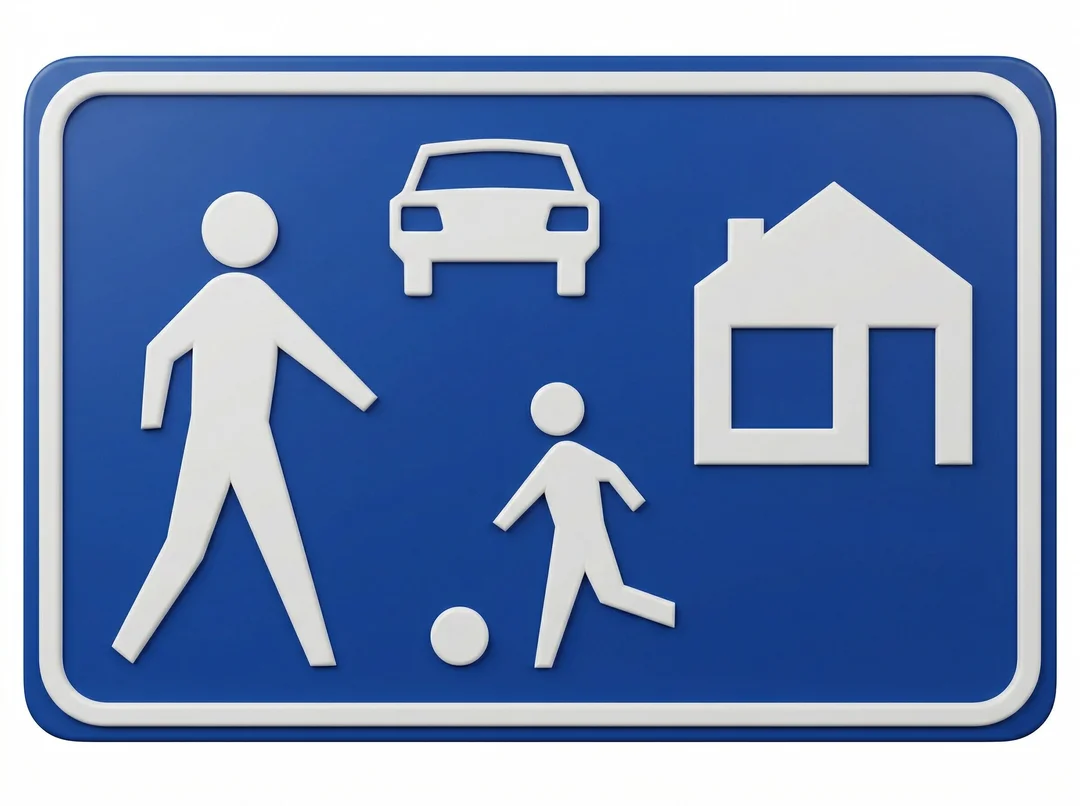
Woonerf (Erf) — A residential area within a built-up zone where pedestrians have priority across the full width of the road and children may play on the street. Maximum speed: 15 km/h.
Traffic Concepts and Rules
Broken Line — A dashed road marking that generally permits lane changes and overtaking.
Compulsory Direction of Travel (Rijrichting) — The mandatory direction a driver must follow, often indicated by signs or road markings.
Crossing Children (Overstekende kinderen) — A traffic situation involving children crossing the road, particularly near schools, requiring extra caution from drivers.
Drive Away — To depart from a location by driving, such as pulling out of a parking space.
Following Distance — The safe gap (measured in seconds or car lengths) you maintain behind the vehicle ahead, allowing enough reaction time.
Funeral Procession (Uitvaartstoet) — A convoy of motor vehicles accompanying a deceased person to a burial or cremation site, displaying designated identification marks. Special traffic rules may apply.
Get in Lane (Voorsorteerstrook) — To position your vehicle in the correct lane in advance of a turn, exit, or lane merge.
Give Way (Voorrang verlenen) — Allowing other drivers to continue their route without obstructing them.
Local Traffic (Bestemmingsverkeer) — Drivers whose destinations are located on or immediately adjacent to a road that is otherwise closed to certain vehicle categories, and who can only reach those destinations via that road. Includes scheduled buses.
Maximum Speed — The highest legally permitted speed on a given road, as set by traffic regulations.
Merge — The act of two or more traffic lanes coming together into one, requiring smooth cooperation between drivers.
Military Convoy (Militaire kolonne) — A group of military or emergency-service motor vehicles travelling under a single commander and displaying designated identification marks.
Minimum Speed — The lowest permitted speed on a given road, intended to maintain safe traffic flow and prevent slow-moving hazards.
No Entry Sign (Geslotenverklaring) — A sign indicating that entry to a road is prohibited and the road may not be used.
No Thoroughfare — An indication that access to a road is prohibited; the road may not be driven on or entered.
Parking — Stopping and leaving a vehicle for a purpose other than immediately picking up or dropping off passengers or loading/unloading goods.
Recommended Speed (Adviessnelheid) — A suggested (not mandatory) speed for safe travel on a particular stretch, indicated by advisory signs.
Road Traffic (Verkeer) — All road users collectively.
Road Users (Weggebruikers) — Pedestrians, cyclists, moped riders, drivers of disabled-person vehicles, motor vehicles, trams, horse riders, animal handlers, and drivers of horse-drawn or other wagons.
Rush Hour — Peak traffic periods when roads are most congested.
Straight On — Continuing in a forward direction without turning.
Traffic Director (Verkeersregelaar) — A person who directs traffic as part of their professional duties, as distinct from a traffic escort or event marshal performing simple traffic control.
Traffic Jam (Filevorming) — A situation where traffic flow is significantly slowed or stopped, caused by congestion, accidents, roadworks, or adverse weather.
Zone — An area where specific traffic regulations apply (e.g. speed limits, parking restrictions, or low-emission rules), usually indicated by signs at entry and exit points.
Vehicle Components, Safety, and Maintenance
ABS (Anti-lock Braking System) — A safety system that prevents wheels from locking during heavy braking, allowing the driver to maintain steering control.
Bicycle Carrier (Fietsdrager) — A rack mounted on a vehicle (usually at the rear or on the roof) for transporting bicycles.
Blind Spot (Dode hoek) — An area around a vehicle not visible through mirrors or direct line of sight, posing a hazard during lane changes or turns.
Braking Distance (Remweg) — The distance a vehicle travels from the moment the brakes are applied until it comes to a complete stop.
Cruise Control — An electronic system that maintains a constant speed set by the driver, reducing the need to hold the accelerator.
Dashboard — The panel in front of the driver housing instruments such as the speedometer, fuel gauge, and warning lights.
Daytime Running Lights (Dagrijlicht) — Lights that activate automatically during the day to make the vehicle more visible to others.
Dipped Headlights — Low-beam headlights that illuminate the road ahead while minimising glare for oncoming traffic.
Engine Oil — Lubricant used in internal combustion engines to reduce friction, disperse heat, and protect components from wear.
Fog Lights (Mistlampen) — Lights mounted low on the front of a vehicle, emitting a wide, flat beam to improve visibility in fog or mist while reducing glare.
Full Beam Headlights — High beams that project a powerful, long-range light, used when no traffic is ahead to avoid dazzling other road users.
Indicator (Richtingaanwijzer) — A flashing light on a vehicle signalling the driver's intention to turn, change lanes, or merge.
Number Plate (Kentekenplaat) — A plate displaying a unique registration code assigned by the authorities for identification purposes.
Parking Disc (Parkeerschijf) — A small clock-like device placed on the dashboard to indicate when parking began, used in time-limited parking zones.
Rear Fog Lights — Bright red lights at the rear of a vehicle, switched on in fog or heavy rain to make the vehicle visible to following traffic.
Reflector — A device or material that reflects light, improving visibility at night; used on vehicles, signs, and road delineators.
RPM (Revolutions Per Minute / Toerental) — A measure of engine crankshaft rotation speed, displayed on the tachometer.
Screen Wash (Ruitensproeiervloeistof) — Fluid used in windscreen washers to clean the glass and remove dirt, insects, or road grime.
Seat (Zitplaats) — A structure specifically constructed to accommodate one adult. An improvised seat or one intended only for use while stationary does not count.
Seat Belt (Autogordel) — A safety restraint securing occupants during sudden stops or collisions. A three-point belt goes over shoulder and hip; wearing a three-point belt as a lap-only belt is not permitted.
Side Lights — Low-intensity front and rear lights used to increase visibility in dim conditions or when parked.
Summer Tyres (Zomerbanden) — Tyres optimised for warm conditions, offering good grip on dry and wet roads at higher temperatures.
Three-Point Seat Belt (Driepuntsgordel) — A belt with three anchor points that crosses both the shoulder and the lap for maximum protection.
Tyre Pressure (Bandenspanning) — The air pressure inside a tyre, measured in bar or kPa, crucial for safety, grip, and fuel efficiency.
Tyre Tread Depth — The depth of the grooves on a tyre surface; adequate depth ensures water dispersal and road grip.
Warning Light (Waarschuwingslampje) — An indicator on the dashboard that illuminates to alert the driver of a fault, such as low oil pressure or engine overheating.
Warning Triangle (Gevarendriehoek) — A reflective triangle placed on the road to warn other drivers of a stopped vehicle or hazard ahead.
Windscreen Wiper (Ruitenwisser) — A rubber-bladed device that clears rain, snow, and debris from the windscreen.
Wing Mirror (Buitenspiegel) — A side-view mirror on the exterior of a vehicle, used to observe traffic to the rear and sides.
Winter Tyres (Winterbanden) — Tyres with a special rubber compound and tread pattern for cold conditions, providing improved grip on snow, ice, and wet surfaces. Marked with a snowflake symbol.
Wear (Slijtage) — The gradual deterioration of vehicle components (tyres, brakes, etc.) due to friction, use, and environmental exposure.
Driving Skills and Behaviour
Ability to Drive (Rijvaardigheid) — The skill and competence required to operate a vehicle safely, including knowledge of rules, vehicle control, and hazard response.
Ability to React (Reactievermogen) — The capacity to respond quickly and correctly to changing traffic conditions while driving.
Anticipation (Anticiperen) — Looking ahead and predicting potential hazards or changes in traffic to react proactively and prevent accidents.
Aquaplaning — Loss of tyre grip caused by a layer of water between the tyre and road surface, resulting in loss of steering and braking control.
Breakdown (Autopech) — A mechanical failure that renders a vehicle inoperable, requiring roadside assistance or repair.
Breakdown Service (Pech-hulpdienst) — A service providing roadside assistance, towing, and emergency repairs to stranded motorists.
CO₂ Emissions (CO₂-uitstoot) — The amount of carbon dioxide released by burning fuel in a vehicle, contributing to climate change and air pollution.
Driving Lesson (Rijles) — A session of practical instruction with a qualified instructor to teach safe driving skills.
Hands-Free Calling (Handsfree bellen) — Using a mobile phone via Bluetooth or a built-in system while driving, to reduce distraction compared to handheld use.
Handheld Device Use (Handheld bellen) — Holding any mobile electronic device (phone, tablet, media player) while driving, which is prohibited as it causes dangerous distraction.
Navigation System (Navigatiesysteem) — An electronic GPS-based device or app providing route planning and turn-by-turn directions.
Reaction Time (Reactietijd) — The time between perceiving a hazard and physically responding (e.g. pressing the brake pedal).
Reverse (Achteruitrijden) — Manoeuvring a vehicle backwards, for instance when parking or performing a three-point turn.
Roadholding (Wegligging) — A vehicle's ability to maintain traction and stability, especially in corners, during braking, or on uneven surfaces.
Rut Formation (Spoorvorming) — Deep grooves worn into the road surface by repeated heavy traffic, which can collect water and reduce grip.
Side Wind (Zijwind) — A crosswind blowing across the direction of travel, which can push vehicles sideways and affect stability — particularly for high-sided vehicles.
Stopping Distance (Stopafstand) — The total distance covered from the moment a driver perceives a hazard to the moment the vehicle stands still, comprising reaction distance plus braking distance.
Use Your Horn (Claxonneren) — Sounding the vehicle's horn to warn other road users of danger.
Warm Up — Allowing the engine to reach its operating temperature before driving, ensuring efficient lubrication and performance.
Weather Conditions (Weersomstandigheden) — Atmospheric factors (rain, snow, fog, wind, temperature) that affect driving safety and vehicle handling.
Signs, Signals, and Road Markings
Broken Line — A dashed line permitting lane changes and overtaking.
Hatched Road Markings — See Road Infrastructure section above.
Matrix Sign (Matrixbord) — An electronic overhead display showing variable messages, speed limits, or lane instructions in real time.
No Entry Sign — A sign prohibiting vehicles from entering a road or area.
Solid Line — A continuous, unbroken road marking that generally prohibits crossing, lane changes, or overtaking.
Speed Control (Snelheidscontrole) — Police enforcement of speed limits using cameras or mobile patrols.
Stop Sign — A regulatory sign requiring drivers to come to a full stop and yield before proceeding.
Symbol (Symbool) — A graphic icon on a traffic sign, map, or instruction material conveying information or a warning.
Traffic Sign (Verkeersbord) — A visual device placed along roads to communicate rules, warnings, or directions to road users.
People and Participants
Blind Person Holding a White Stick with Red Rings — A visually impaired pedestrian using a white cane marked with red rings to navigate and detect obstacles.
Driver (Bestuurder) — Any road user other than a pedestrian. For motor vehicles specifically: the person controlling the vehicle, or (in vehicles requiring a B/C/D/E licence with dual controls) the instructor giving lessons or the official conducting a driving test.
Drivers (Bestuurders) — All road users except pedestrians.
New Driver (Beginnend bestuurder) — A person who obtained their licence within the last 5 (or 7) years, subject to additional rules and restrictions.
Occupants (Inzittenden) — All individuals inside a vehicle, including the driver and passengers.
Opponent (Tegenpartij) — The other party involved in a traffic incident or collision.
Passenger (Passagier) — A person travelling in a vehicle who is not the driver.
Permit Holders (Vergunninghouders) — People or vehicles authorised to use specific facilities (e.g. reserved parking) by virtue of a valid permit.
Pedestrian — A person travelling on foot.
Road Sweeper Operator — The driver of a road-cleaning vehicle.
Victim (Verkeersslachtoffer) — A person harmed, injured, or killed as a result of a traffic incident.
Legal and Administrative Terms
APK (Algemene Periodieke Keuring) — The mandatory periodic vehicle inspection ensuring safety and environmental compliance.
Breath Analysis (Ademanalyse) — A laboratory-grade test measuring the exact alcohol concentration in a person's breath, performed at a police station.
Breath Test (Ademtest) — A roadside screening to estimate blood alcohol level from a breath sample.
Competent Authorities (Bevoegd gezag) — The authorities defined in Article 18(1) of the Road Traffic Act 1994.
Day (Dag) — The period between sunrise and sunset.
Driving Behaviour (Rijgedrag) — A driver's conduct behind the wheel, including rule compliance, interaction with other road users, and general driving competence.
Educational Measure Alcohol and Traffic (EMA) — A compulsory CBR course for drivers caught driving with elevated alcohol levels.
Educational Measure Behaviour and Traffic (EMG) — A compulsory CBR course for drivers who commit serious speeding or behavioural offences.
Emergency Medical Services (Diensten voor spoedeisende medische hulpverlening) — Ambulance services licensed under the Ambulance Transport Act, plus vehicles of other services providing first-response emergency care under a central dispatch.
Facility for Lying Down (Ligplaats) — As defined in Article 1.1 of the Vehicle Regulations.
Green Card — An international insurance certificate listing a driver's coverage details, recommended (though not mandatory in most EU/EEA countries) when driving abroad.
Hazardous Substances — Materials posing a risk to health, safety, property, or the environment that require special handling during transport.
Identity (Identiteit) — The unique characteristics distinguishing a person or object, used for identification in legal, administrative, or social contexts.
Illuminated Transparency (Verlicht transparant) — As defined in Article 1.1(bb1) of the Vehicle Regulations.
Light Educational Measure Alcohol and Traffic (LEMA) — A lighter CBR course for first-time or lower-level drink-driving offences.
Loose Chippings (Steenslag) — Small stone fragments thrown up by vehicles or scattered during road resurfacing, potentially damaging windscreens and paintwork.
Night (Nacht) — The period between sunset and sunrise.
Optical and Acoustic Signals (Optische en geluidssignalen) — Sirens, flashing lights, and beacons used by emergency vehicles to warn others and claim right of way.
Parking Space (Parkeergelegenheid) — A specific location designated for parking, often indicated by road markings or signs.
Police Checks (Politiecontrole) — Routine inspections by law enforcement to verify compliance with traffic and safety laws.
Roadworks (Wegwerkzaamheden) — Construction or maintenance on roads, often causing temporary lane closures, diversions, and speed restrictions.
Safety Cell (Veiligheidscel) — A structural component of a moped, motorcycle, or three-wheeled motor vehicle that protects the rider or passengers from head injury.
Diversion Route (Uitwijkroute) — An alternative route drivers can take to avoid obstacles, traffic jams, or incidents on the main road, indicated by signs.
Search (Fouillering) — A police officer may search a vehicle when there are reasonable grounds to suspect the presence of weapons, stolen property, or criminal evidence.
Vehicle Registration Card (Kentekencard) — A credit-card-format document issued by the RDW confirming a vehicle's registration, showing the holder's details and the vehicle's technical data.
Vehicle Registration Certificate (Kentekenbewijs) — The official document confirming a vehicle's registration and ownership, required for licensing, insurance, and transfer of ownership.
Vehicle Registration Code (Tenaamstellingscode) — A code accompanying the registration document, needed when a vehicle changes ownership.
Miscellaneous Exam Terms
Accident (Verkeersongeval) — An incident involving one or more vehicles that results in property damage, injury, or death.
Alcohol — A psychoactive substance in beverages that impairs judgement, coordination, and reflexes, posing serious risks when driving.
Detour / Diversion — An alternative route to bypass an obstruction or road closure.
Driving Ban (Rijverbod) — A temporary prohibition on operating any vehicle (including bicycles), lasting up to 24 hours.
Licence Suspension (Rijontzegging) — A prohibition on driving motorised vehicles for a specified period, imposed by a court or public prosecutor.
Skid Risk (Slipgevaar) — An elevated risk of losing grip due to slippery conditions (rain, ice, oil, snow).
Slip — Loss of traction causing the vehicle to slide uncontrollably.
Towing (Slepen) — Pulling a disabled vehicle with another vehicle or tow truck.
Warning Lights (Waarschuwingslichten) — Flashing hazard lights activated to alert other drivers to an emergency, breakdown, or slow/stationary vehicle.
Legal Terminology Reference
The definitions below are drawn from Dutch traffic law. You do not need to memorise every legal term word-for-word for the exam, but familiarity with their meaning is helpful.
Ambulance — Motor vehicle equipped and intended for ambulance transport as defined in the Ambulance Transport Act.
Animal Ambulance — Motor vehicle equipped and intended for transporting sick or wounded animals.
Bicycle with Pedal Assistance — A bicycle fitted with an electric motor (max. 0.25 kW nominal continuous output) whose assistance gradually reduces and stops at 25 km/h, or sooner if the rider ceases pedalling (Road Traffic Act).
Bus (Autobus) — A motor vehicle designed to carry more than eight persons, not counting the driver.
Bus Lane (Busstrook) — A portion of the carriageway marked by lines and labelled "BUS" or "LIJNBUS".
Bus Route (Busbaan) — A carriageway marked with "BUS" or "LIJNBUS".
Commercial Vehicle (Bedrijfsauto) — As set out in Article 1.1(h) of the Vehicle Regulations.
Competent Authorities (Bevoegd gezag) — As defined in Article 18(1) of the Road Traffic Act 1994.
Continuous Carriageway (Doorgaande rijbaan) — A carriageway without entry or exit lanes.
Cycle Lane (Fietsstrook) — A marked portion of the main carriageway displaying bicycle depictions, separated by lines.
Day (Dag) — The period between sunrise and sunset.
Disabled Person's Vehicle (Gehandicaptenvoertuig) — A vehicle for transporting a disabled person, not wider than 1.10 m, without an engine or with an engine whose top design speed does not exceed 45 km/h, and which is not a moped.
Divider (Puntstuk) — A polygon on the road surface at points where roads, lanes, or carriageways merge or diverge.
Driver of a Motor Vehicle (Bestuurder van een motorvoertuig) — (1) The person controlling the motor vehicle, or (2) for vehicles requiring a B, C, D, or E licence with dual controls, the instructor giving lessons or the official overseeing a driving test (excluding tests under Article 131(1) of the Road Traffic Act 1994).
Drivers (Bestuurders) — All road users except pedestrians.
Emergency Medical Services — Ambulance services licensed under the Ambulance Transport Act, and vehicles of other services providing first-response emergency care under dispatch from a central post as defined in Article 1 of the same Act.
Emergency Vehicle (Voorrangsvoertuig) — A motor vehicle fitted with the optical and acoustic signals described in Article 29.
Entry Lane (Invoegstrook) — A section of road separated from the main carriageway by markings, intended for drivers joining the through traffic.
Exit Lane (Uitrijstrook) — A section of road separated from the main carriageway by markings, intended for drivers leaving the through traffic.
Facility for Lying Down (Ligplaats) — As defined in Article 1.1 of the Vehicle Regulations.
Give Way Markings (Haaientanden) — Priority triangles on the carriageway surface.
Giving Priority (Voorrang verlenen) — Allowing the relevant drivers to proceed without obstruction.
Goods Vehicle (Vrachtauto) — A motor vehicle with a maximum permitted weight exceeding 3,500 kg, not intended for carrying passengers.
Hard Shoulder / Refuge Section (Vluchthaven / Vluchtstrook) — An area at the edge of a motorway or main highway carriageway, separated by a solid line, intended for emergency use — except when designated as a rush-hour lane.
Illuminated Transparency (Verlicht transparant) — As defined in Article 1.1(bb1) of the Vehicle Regulations.
Invalid Carriage / Disabled Person's Vehicle — See "Disabled Person's Vehicle" above.
Junction (Kruispunt) — A crossing or division of roads.
Level Crossing (Overweg) — An intersection of a road and railway track, designated by sign J12 or J13.
Local Traffic (Bestemmingsverkeer) — Drivers whose destinations lie on or directly beside a road closed to certain categories, reachable only via that road, plus scheduled bus drivers.
Main Highway (Autoweg) — A road designated by sign G3. Adjacent parking areas, filling stations, and bus stops are not part of it.
Microcar (Brommobiel) — A moped with more than two wheels, fitted with a body enclosing the driver.
Military Convoy (Militaire kolonne) — A line of military or emergency-organisation motor vehicles under one commander, bearing identification marks.
Moped (Bromfiets) — Defined in multiple subcategories (2, 3, or 4 wheels) with maximum design speeds of 25–45 km/h and engine specifications as set out in the Road Traffic Act 1994.
Motor-Assisted Bicycle (Snorfiets) — A moped registered for a maximum design speed of 25 km/h or less.
Motor-Assisted Trailer Bicycle (Brombakfiets) — A three-wheeled moped with two front wheels (diameter > 0.40 m), exclusively for transporting the driver, goods, and possibly a rear passenger.
Motorcycle (Motorfiets) — A motor vehicle on two wheels, with or without a sidecar or trailer.
Motorised Funeral Procession (Uitvaartstoet van motorvoertuigen) — A procession of motor vehicles accompanying a body or cremation ashes, bearing identification marks as described in Article 30c.
Motor Vehicles (Motorvoertuigen) — All motorised vehicles except mopeds, pedal-assisted bicycles, and disabled-person vehicles, intended to travel off rails.
Motorway (Autosnelweg) — A road designated by sign G1. Adjacent parking areas, filling stations, and bus stops are not part of it.
Night (Nacht) — The period between sunset and sunrise.
No Thoroughfare (Geslotenverklaring) — A prohibition on entering or using the road in question.
Parking (Parkeren) — Leaving a vehicle stationary other than for the time needed for immediate passenger boarding/alighting or loading/unloading of goods.
Parking Area / Parking Lane (Parkeerhaven / Parkeerstrook) — A paved strip alongside the carriageway for stationary or parked vehicles.
Passenger Car (Personenauto) — As defined in Article 1.1(at) of the Vehicle Regulations.
Road Edges — The cambered edges of a carriageway.
Road Traffic (Verkeer) — All road users.
Road Users (Weggebruikers) — Pedestrians, cyclists, moped riders, drivers of disabled-person vehicles, motor vehicles or trams, horse riders, animal handlers, and drivers of horse-drawn or other wagons.
Rush-Hour Lane (Spitsstrook) — The hard shoulder designated as a traffic lane under sign C23-01.
Safety Cell (Veiligheidscel) — A structural part of a moped, motorcycle, or three-wheeled motor vehicle that protects rider or passengers from head injury.
Scheduled Bus (Lijnbus) — A motor vehicle used for public transport within the meaning of the Passenger Transport Act 2000.
Seat (Zitplaats) — A purpose-built structure offering space for one adult. May be an individual seat or part of a bench. Improvised or stationary-use-only seats do not qualify.
T100 Bus — A bus whose registration indicates configuration for a maximum speed of 100 km/h. Equivalent status applies to buses registered in other EU/EEA states with appropriate certification.
Three-Wheeled Motor Vehicle — As defined in Article 1.1(q) of the Vehicle Regulations.
Traffic Director (Verkeersregelaar) — A person performing professional traffic-directing duties, as opposed to an event marshal handling simple traffic tasks.
Traffic Lane (Rijstrook) — A marked portion of the carriageway wide enough for motor vehicles with more than two wheels.
Trailer (Aanhangwagen) — Vehicles towed by or clearly intended to be towed by another vehicle, including semi-trailers.
Van (Bestelauto) — A motor vehicle for goods transport with a maximum permitted mass not exceeding 3,500 kg.
Vehicles (Voertuigen) — Bicycles, mopeds, disabled-person vehicles, motor vehicles, trams, and wagons.



 General Provisions: Legal Rules and Key Terms