

 Special Manoeuvres and Overtaking
Two topics that come up again and again on the CBR theory exam: special manoeuvres and overtaking. They may seem straightforward, but the details trip up a lot of students. This guide covers both subjects thoroughly — the rules, the exceptions, and the reasoning behind them.
Special Manoeuvres
What Counts as a Special Manoeuvre?
A special manoeuvre (bijzondere manoeuvre) is any action where you change your position on the road in a way that might affect other traffic. The golden rule is simple: when you perform a special manoeuvre, you must give way to all other road users — including pedestrians.
These are the special manoeuvres under Dutch traffic law:
- Pulling away (driving off from a parked position)
- Reversing
- Driving onto the road from a driveway (exit)
- Turning off the road into a driveway (entrance)
- Making a U-turn
- Joining the main carriageway from an entry lane
- Leaving the main carriageway onto an exit lane
- Changing lanes
The common thread: in each case, you are the one disrupting the normal flow of traffic. That's why the responsibility falls on you to make sure it's safe.
Pulling Away
Driving off from a parking space, the side of the road, or any standstill position is a special manoeuvre. You must wait until no other road user will be hindered by your movement.
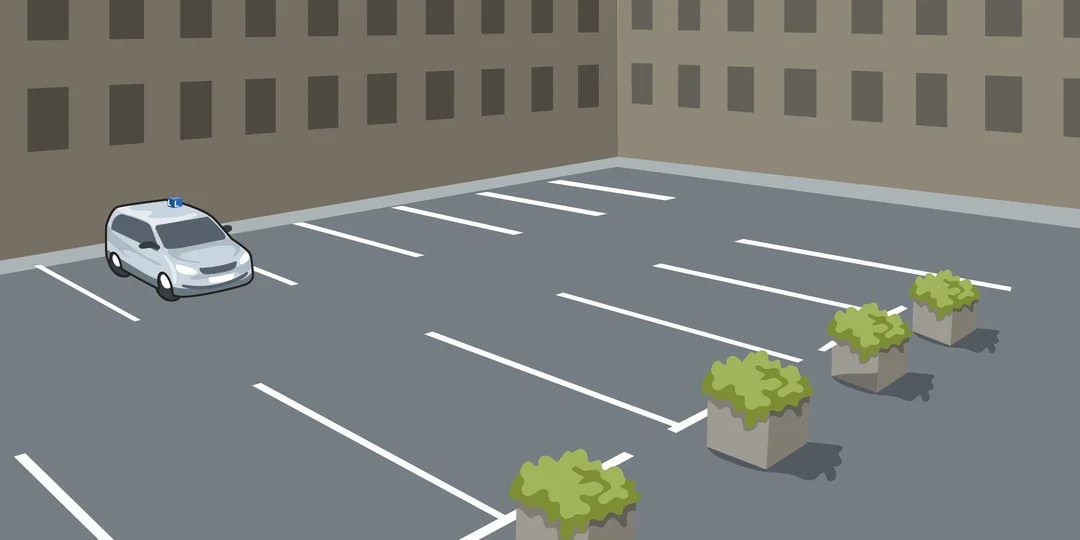
How to do it safely:
- Check your mirrors — interior mirror first, then the side mirror on the side you're pulling into.
- Look over your shoulder to check the blind spot.
- Only when the road is clear: switch on your indicator.
- Pull away smoothly.
Exam tip: Only signal when you're actually about to move. Switching on your indicator while still waiting is misleading to other road users.
Reversing
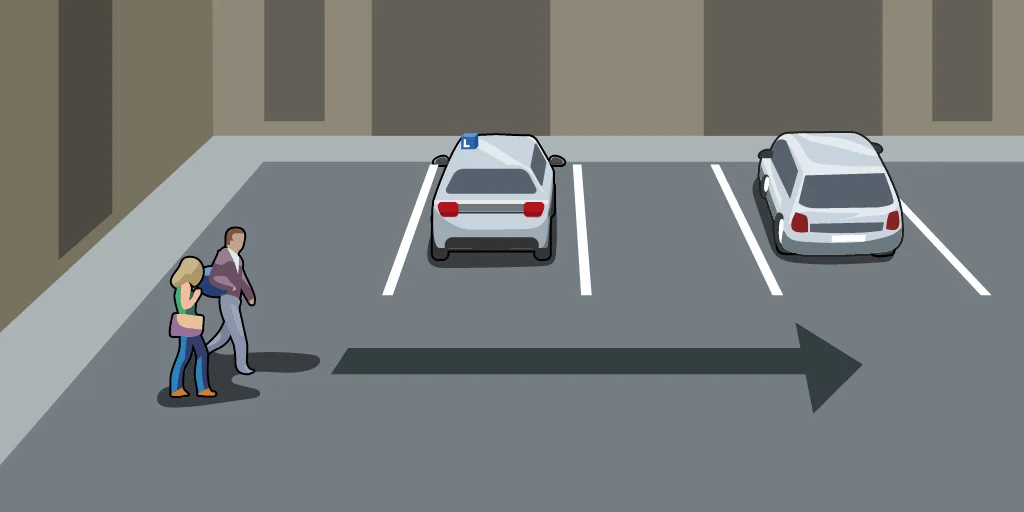
Reversing is a special manoeuvre. You must give way to everyone, and that explicitly includes pedestrians. Because your view is limited when driving backwards, take extra care:
- Keep your speed very low.
- Use your mirrors, but also turn your head to look directly behind you.
- If visibility is poor, ask a passenger or bystander to guide you.
Entering and Exiting Driveways
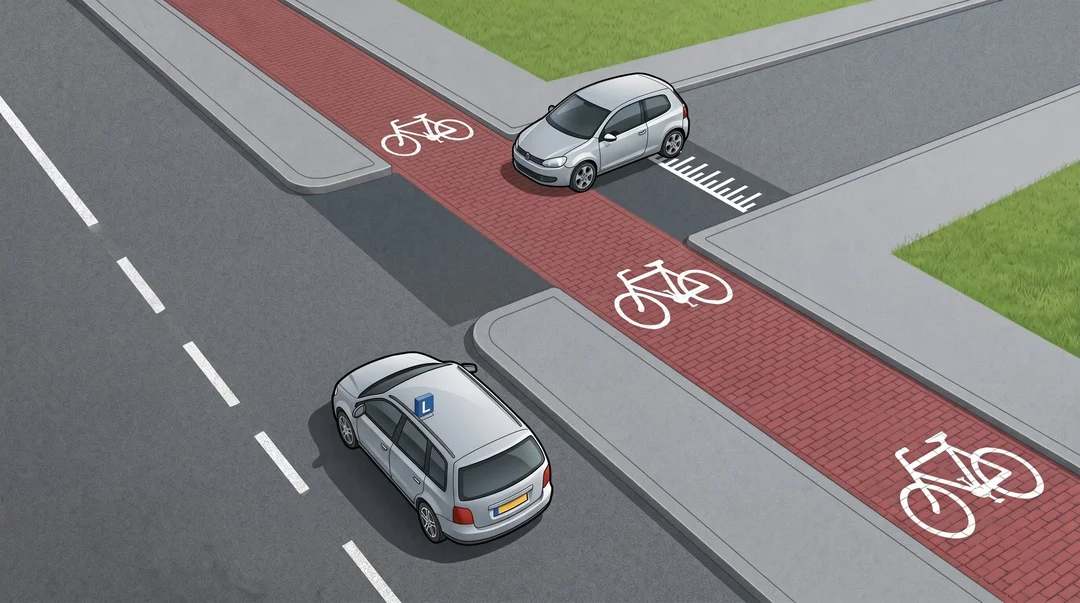
When you drive out of a driveway (uitrit) onto the road, or off the road into a driveway (inrit), you're performing a special manoeuvre. In both cases, you must give way to all traffic on the road — including cyclists and pedestrians.
This applies whether it's a private driveway, a petrol station exit, or a car park entrance. The moment you cross the boundary between a driveway and the public road, you must yield to everyone.
Making a U-Turn
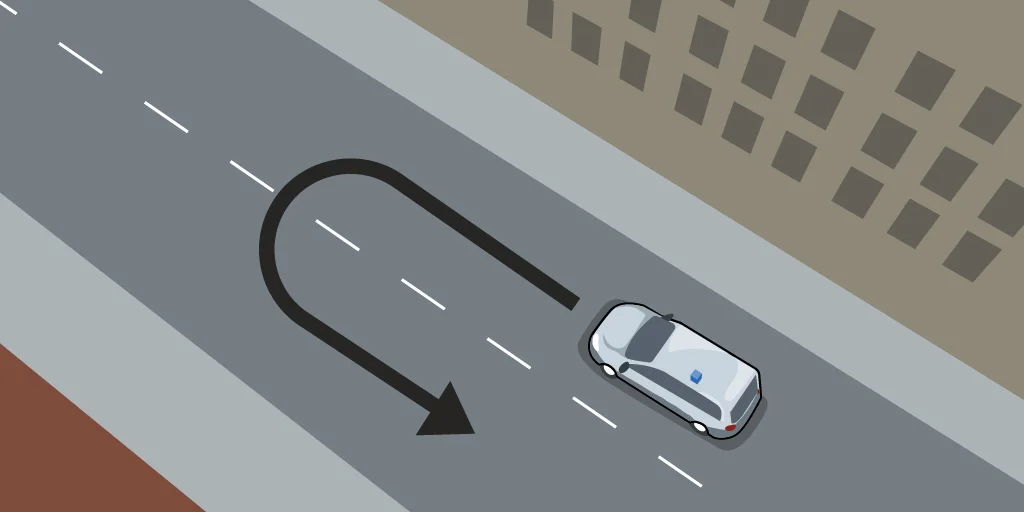
A U-turn (keren) is a special manoeuvre. You must give way to all road users before and during the turn. Because a U-turn takes up a lot of road space and time, it's one of the more risky manoeuvres — only do it where you have enough room and clear visibility in both directions.
Turning and Road Positioning
When you intend to turn left or right at a junction, you should position yourself (voorsorteren) in advance. This helps traffic flow and makes your intentions clear.
Turning left:
- On roads with oncoming traffic: move as close as possible to the centre line (wegas)
- On one-way streets or roads with separated carriageways: position yourself as far left as possible
Turning right:
- On a normal road: move as far right as possible, against the kerb or verge
- On a road with a bicycle lane marked by a solid line: position yourself against the line (don't enter the cycle lane)
- On a road with a bicycle lane marked by a broken line: you may use the cycle lane to position yourself, provided you don't hinder any cyclists or moped riders. Otherwise, stay next to the cycle lane.
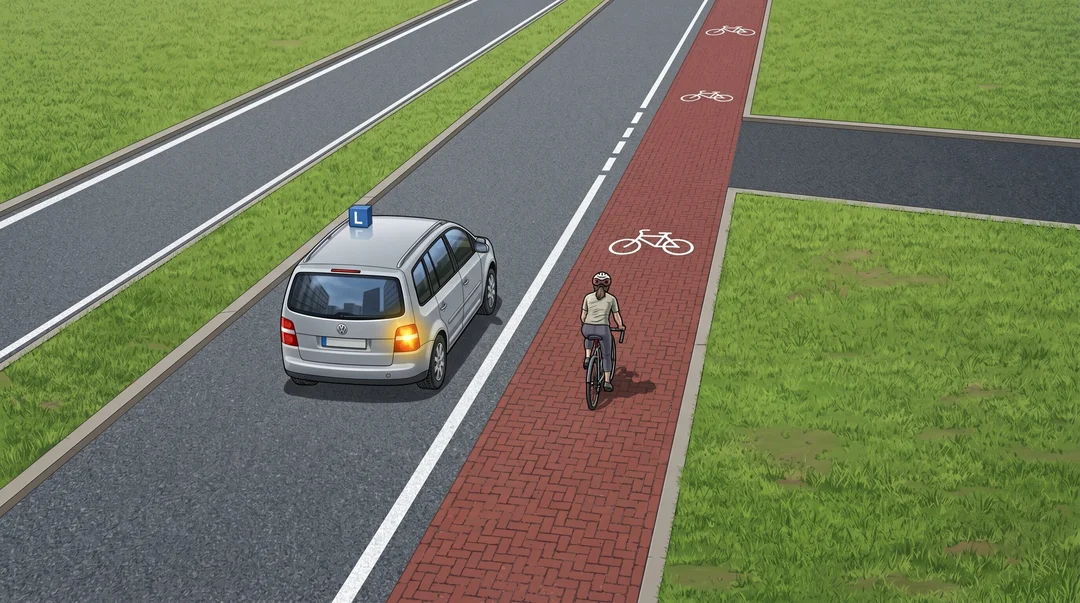
Exam tip: You should position yourself to the side when it improves traffic flow or avoids an unsafe situation. The exam often tests whether you know which side to move to — and the bicycle lane rules catch many students off guard.
Joining a Motorway or Expressway
You enter a motorway (autosnelweg) or expressway (autoweg) via an entry lane (invoegstrook). Joining is a special manoeuvre — traffic on the main carriageway has priority over you.
How to join correctly:
- On the entry lane, accelerate to match the speed of the traffic on the main carriageway.
- Check your mirrors and look over your shoulder to find a gap.
- When you see a safe space, indicate and merge smoothly onto the main carriageway.
- Switch off your indicator immediately after merging.
- Stay in the right-hand lane — don't merge directly into a middle or left lane in one movement. Drive straight for a while before you consider changing lanes.
Don't use the entire length of the entry lane if you don't have to — merge as soon as you find a safe gap.
What if traffic is very dense? Your priority is always to build speed and find a gap. Use your mirrors early, check over your shoulder, and try to create space by making eye contact with drivers on the main carriageway or by using your indicator. Stopping on the entry lane should be an absolute last resort — if you really cannot find any gap despite your best efforts, it's safer to stop near the beginning of the entry lane than at the end, where you'd have no room left to accelerate. But aim to avoid this situation entirely by reading the traffic flow as early as possible.
Exam tip: The entry lane traffic always gives way. Even if a driver on the main carriageway could move over to help, they are not obliged to.
Zip Merging
Zip merging (ritsen) is recommended where two lanes merge into one. The principle is simple: vehicles take turns, one from each lane — like the teeth of a zipper.
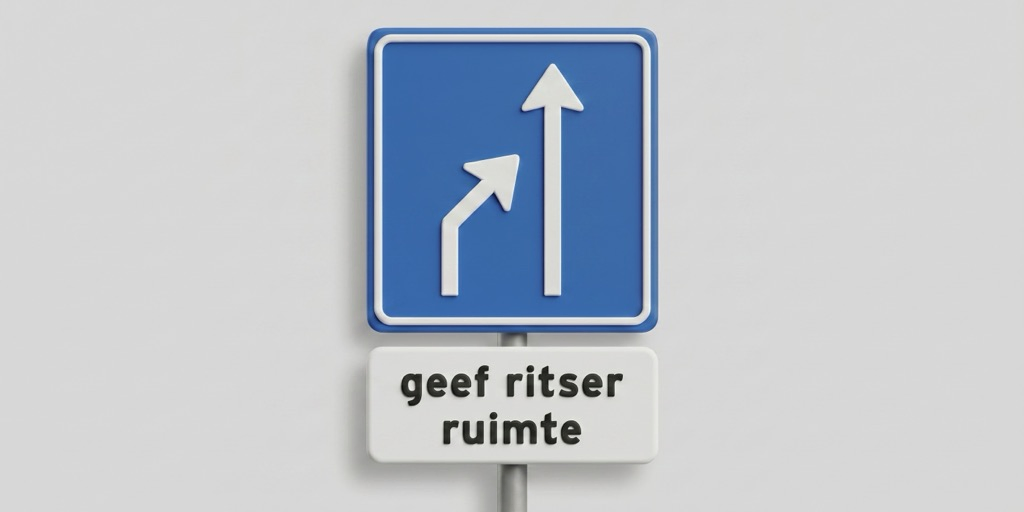
Key rules for zip merging:
- Only relevant when traffic is busy. In free-flowing traffic, just merge normally.
- Keep driving in your lane when you see a warning sign ahead (e.g. "zip merging after 150 metres"). The actual merging point is further on — wait until you reach the "zip from here" sign before you start merging.
- Drivers on the through lane should leave enough space for one vehicle to merge in front of them.
- Adjust your speed to merge smoothly — sudden braking disrupts the flow.
Overtaking
The Basics
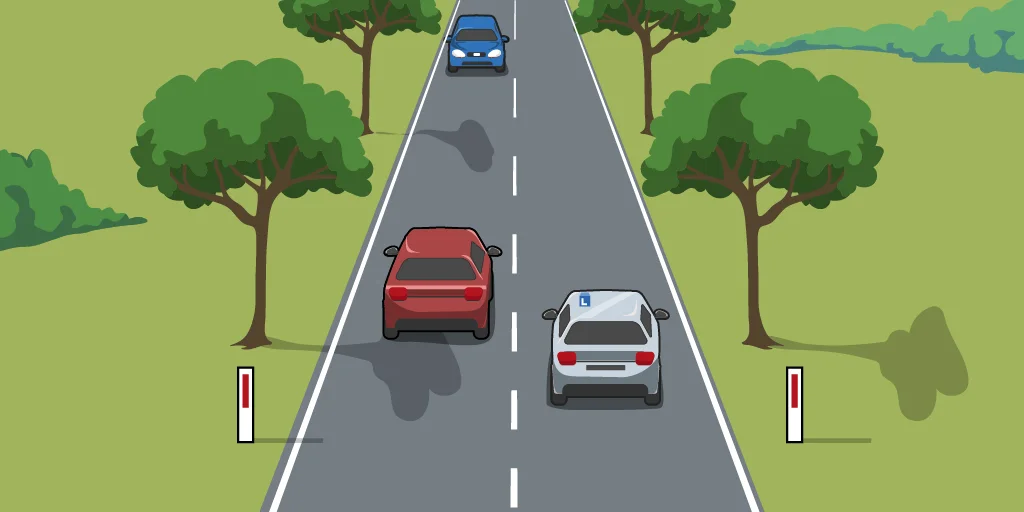
Overtaking (inhalen) means driving faster than another vehicle and passing it. In the Netherlands, overtaking is done on the left side. Every overtaking manoeuvre must meet three conditions:
- It must not cause danger or hindrance to any road user.
- It must not take longer than necessary.
- You must not exceed the speed limit — even while overtaking.
Before you overtake, check that it's safe: use your mirrors, check your blind spot, and signal your intention. Then carry out the manoeuvre in one smooth movement.
When Is Overtaking on the Right Allowed?
Left-side overtaking is the rule, but there are exceptions. You may overtake on the right in these situations:
- You're to the right of block markings, and the vehicle you're passing is to the left of them.
- On or just before a roundabout.
- In queuing traffic (traffic jam).
- You're overtaking a tram.
- The vehicle ahead is positioned to turn left — you may pass it on the right.
Exam tip: Cyclists and moped riders (snorfietsers) are allowed to overtake you on the right. But as a car driver, you may not overtake another car on the right on a multi-lane road — even if the other driver is needlessly occupying the left lane.
Passing vs. Overtaking
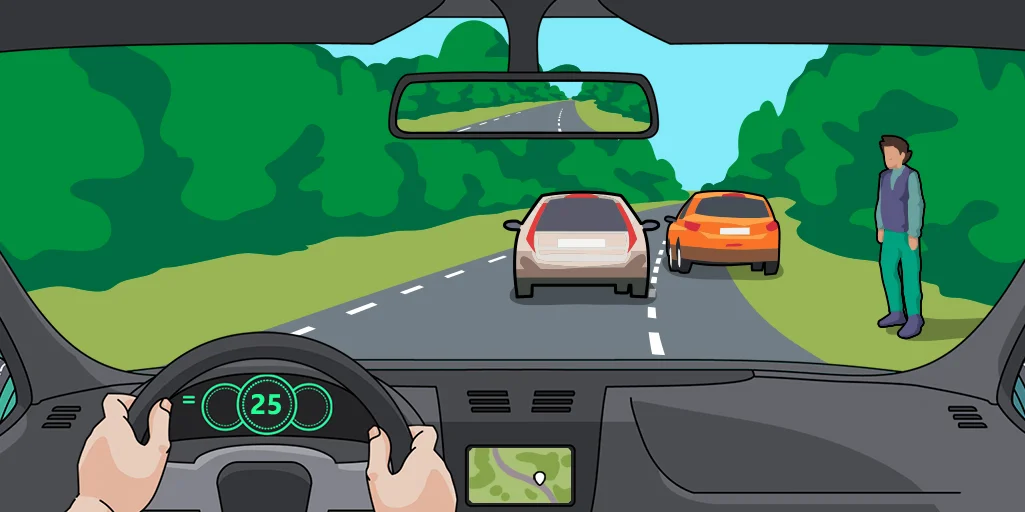
There's an important distinction: passing (voorbijgaan) is not the same as overtaking. You pass a stationary obstacle — a parked car, a broken-down vehicle, roadworks. You overtake a moving vehicle. This matters because overtaking rules (like the F1 prohibition) don't apply to passing.
Overtaking Distance
The overtaking distance is the total space you need to complete the manoeuvre. It depends entirely on the speed difference between you and the vehicle ahead:
- Small speed difference = long overtaking distance. You're barely going faster, so it takes a long time to get past.
- Large speed difference = short overtaking distance. You pass quickly.
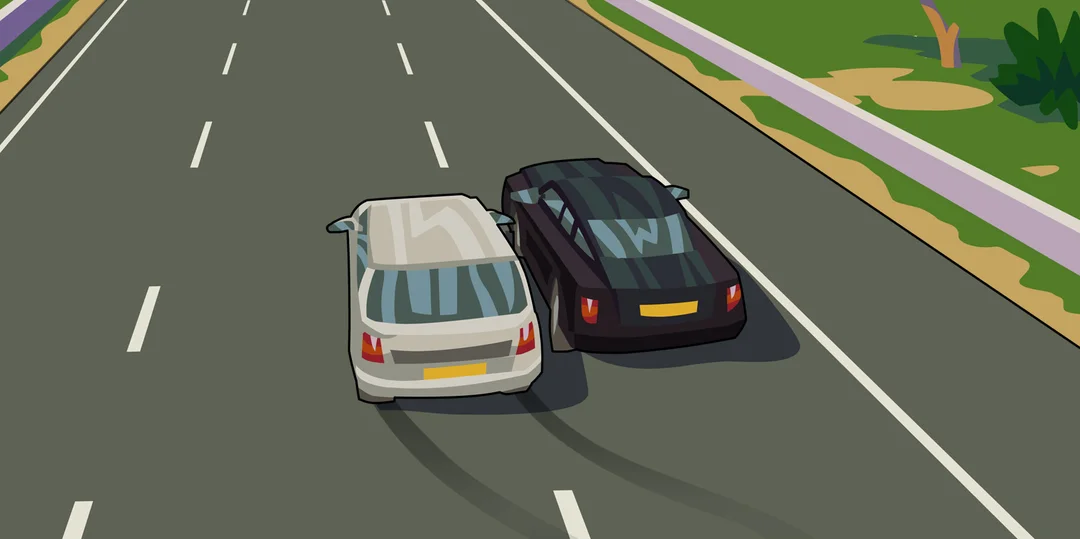
If you realise mid-manoeuvre that you can't complete the overtaking safely — perhaps oncoming traffic appears or the distance isn't enough — you must abort the manoeuvre. Fall back behind the vehicle and wait for a better opportunity.
Overtaking with Oncoming Traffic
On roads where you can expect oncoming traffic, overtaking requires extra caution. You'll be moving into the opposite lane, directly toward approaching vehicles. Before you start:
- Estimate the distance and speed of any oncoming vehicles. Keep in mind: both are hard to judge accurately, especially at higher speeds.
- Make sure you have more than enough room. If there's any doubt, don't overtake.
Completing the Overtaking Manoeuvre
Once you've passed the vehicle, return to your normal lane as soon as possible. But don't cut in front of the overtaken vehicle — that's dangerous. The rule of thumb:
Check your interior mirror: can you see the full front of the vehicle you just passed? Only then is it safe to move back into your lane.
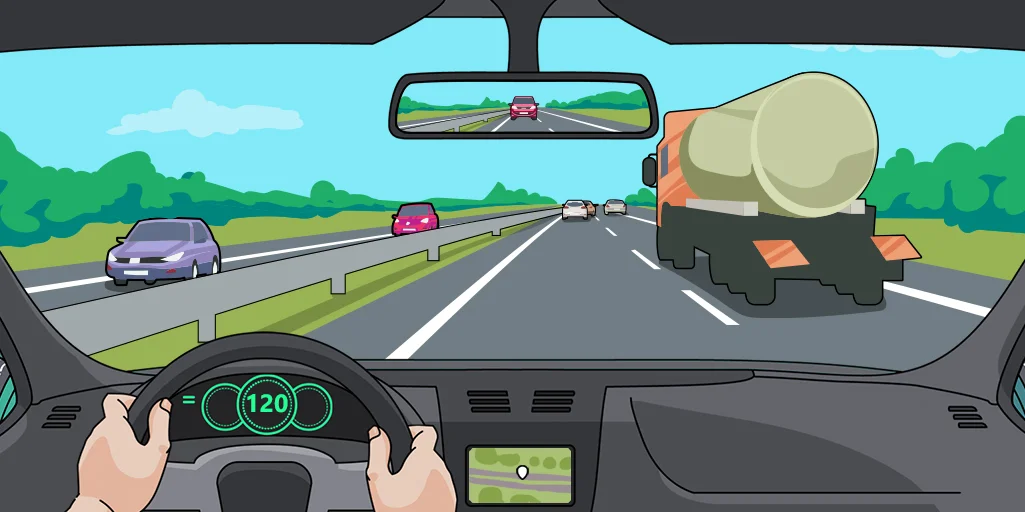
Signal before returning to your lane. The whole manoeuvre should be smooth and predictable for everyone involved.
When Is Overtaking Prohibited?
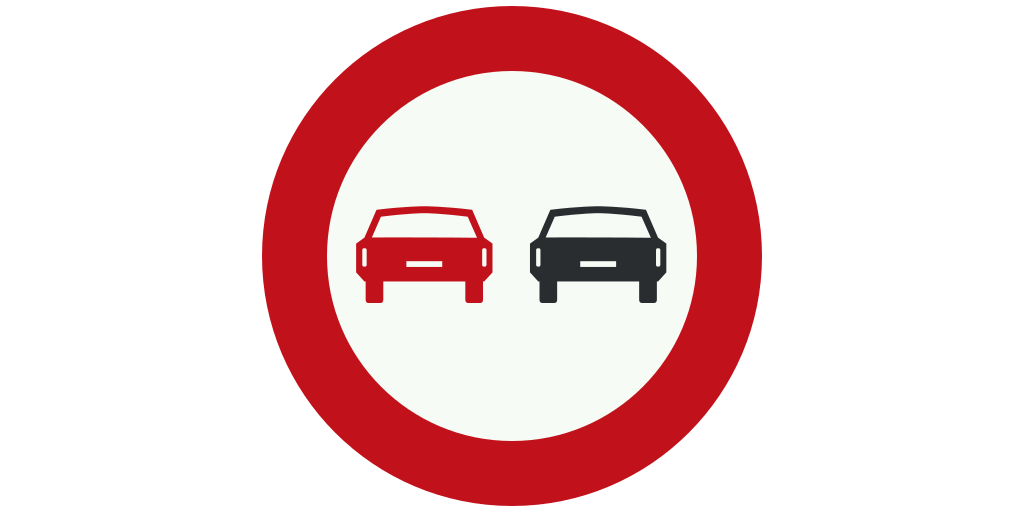
You must not overtake in these situations:
- Sign F1 is displayed (overtaking prohibition). This is the round sign with two cars, one red — you'll recognise it.
- Near a pedestrian crossing (zebrapad). Overtaking here is forbidden because you could block the view of a pedestrian about to cross.
- When a continuous (solid) line is on your side of the road. Crossing it to overtake is not allowed.
Important: You may not start an overtaking manoeuvre just before the sign that warns of an upcoming F1 zone. By the time you're alongside the other vehicle, you'd be inside the prohibition zone.
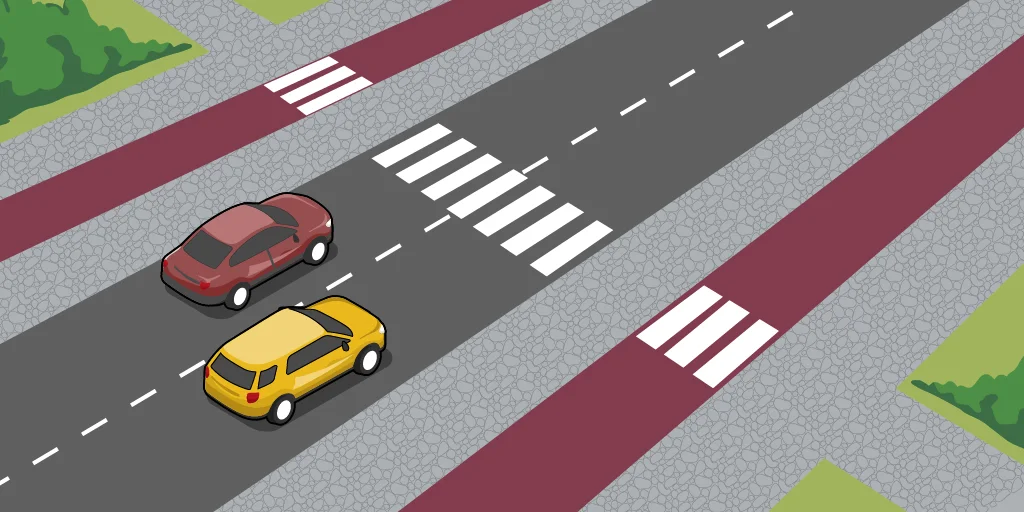
You must also avoid overtaking wherever it creates danger or hinders others. Common situations:
- At intersections — too many conflict points with turning and crossing traffic
- Before a hill crest — you can't see what's coming from the other side
- In a blind bend — oncoming traffic can appear without warning
Exam tip: The exam frequently tests the F1 sign and the pedestrian crossing rule. Remember: you can still pass a stationary obstacle even in an F1 zone — the prohibition only applies to overtaking moving vehicles.
Exam Tips
- Special manoeuvres = give way to everyone. This includes pedestrians. The exam loves to test whether you know that a driver pulling away must yield to a pedestrian on the road.
- Joining from an entry lane is a special manoeuvre. Traffic on the main carriageway always has right of way over you.
- Changing lanes is a special manoeuvre too. You must check mirrors, blind spot, and signal — and give way to traffic already in that lane.
- Overtaking is always on the left — unless you're in a traffic jam, near a roundabout, passing a tram, or the vehicle ahead is turning left.
- Small speed difference = long overtaking distance. This is a classic exam question.
- Abort if in doubt. If you can't safely complete an overtaking manoeuvre, fall back. The exam will always favour the cautious choice.
- Passing is not overtaking. A parked car is an obstacle — you pass it, you don't overtake it.
Master these rules and the reasoning behind them, and you'll handle the special manoeuvres and overtaking questions on your CBR exam with confidence.